
On Freedom by Timothy Snyder
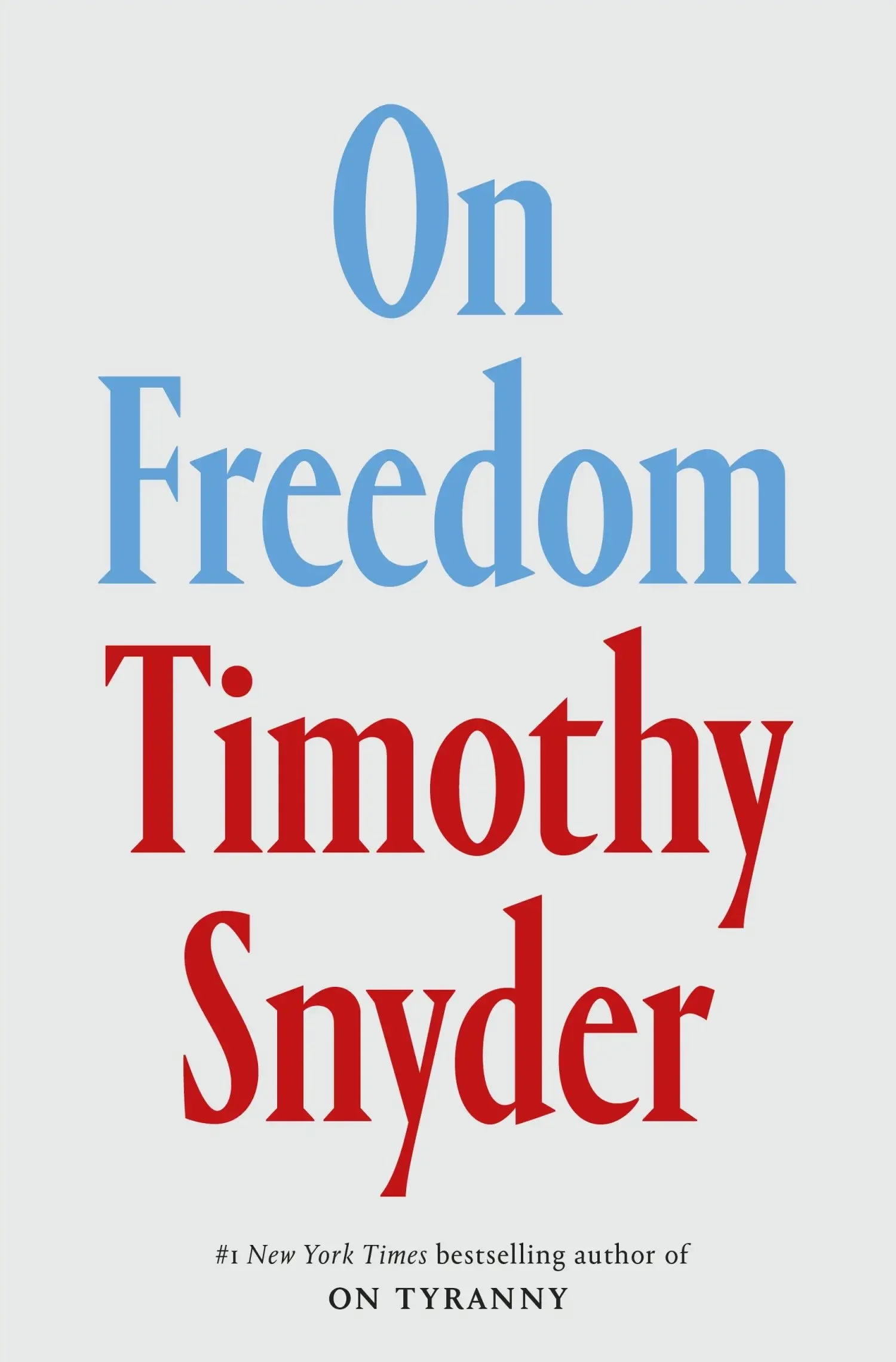
On Freedom isn’t a book about politics. It’s a book about being human in a world that keeps trying to narrow our imagination. Snyder doesn’t treat freedom as a slogan or a team identity. He treats it as a practice — something fragile, relational, and earned through attention, responsibility, and community.
The most provocative idea in the book, at least to me, is that freedom isn’t the absence of constraints. It’s the presence of meaning. We don’t become free by disconnecting from each other. We become free by investing in relationships, obligations, and shared purpose. Freedom requires belonging.
That’s a very different message from the cultural assumption that freedom means “no one can tell me what to do.”
Ideas that stayed with me
• Real freedom is collective — it can’t exist in isolation
• Consumer choice is not the same thing as agency
• Attention is one of the most important civic responsibilities
• Hope isn’t optimism; it’s investment in the future we want to build
• When we stop taking responsibility for one another, someone else will take responsibility for us